JUST IN

Blogger Tips and TricksLatest Tips And TricksBlogger Tricks

CURRENCY EXCHANGE RATES

Advertisement

Showing posts with label Plant Story. Show all posts

Monday, 7 March 2016

Pando: The Heaviest and Oldest Known Organism

Pando (Populus tremuloides), which is also known as the trembling giant is the heaviest and oldest known organism. It is a clonal colony of a single male quaking aspen determined to be a single living organism by identical genetic markers and assumed to have one massive underground root system. Pando was discovered in 1968 by researcher Burton V. Barnes.

The heaviest known organism is estimated to weigh 6,000,000kg, covering 43 hectares (106 acres) and having over 40,000 stems which die individually (but have an average lifetime of 130 years) and is replaced by new stems growing from its roots. The trembling giant achieved the climax of being the oldest known living organism when its root system was discovered to be about 80,000 years old (although some biologist claimed it to be about 1 million years old). According to Michael Grant in Bioscience:
“…quaking aspen regularly reproduces via a process called suckering. An individual stem can send out lateral roots that, under the right conditions, send up other erect stems; from all the above ground appearances the new stems look just like individual trees, forms. This collection of multiple stems called ramets, all form one, single genetic individual, usually termed clone.”
Its survival had been enhanced by some ideal circumstances which are: prevention of its main competitor, conifers through frequent forest fires. A climate shift from wet and humid to semi-arid has obstructed seedling establishment and the accompanying rivalry from younger aspens.

P. tremuloides survived underground during intense fire, but after each of the wild fire, its root system sends up new stems.

Tuesday, 23 February 2016

Manchineel: What Makes It The Most Poisonous Tree In The World

Manchineel (Hipponane mancinella) is a flowering plant native to tropical Southern North America and Nothern South America. They can be found on coastal beaches and in brackish swamps where it grows among mangroves. The name manchineel is from Spanish Manzanilla (little apple). But the present day Spanish name is in fact Manzanilla de la murte, “little apple of death”.


The following enumerated statements justifies why Manchineel is the most poisonous tree in the world:
  1. All the parts of Manchineel contain strong toxins; some are yet to be identified.
  2. The milky whit sap of this plant contains phorbol (a natural, plant derived organic compound) and other skin irritants, producing allergic dermatitis.
  3. During rain, standing beneath the tree will cause blistering of the skin from mere contact with this liquid (even a drop of rain is not an exception as this will surely result to blistering of the skin).
  4. The sap when in contact with cars damages the paints on cars.
  5. Burning the tree is also dangerous because it may cause ocular injuries if the smoke gets in contact with the eyes. Bullous dermatitis, an acute kerato conjunctivitis and possibly large corneal epoithelial defects are produced when the sap reaches the eyes.
  6. Though fatalities from fruit ingestion are yet to be reported. But ingestion may lead to severe gastroenteritis with bleeding, shock, bacterial super infection and the potential for airway compromise due to edema.
  7. Interestingly, the fruit is reportedly pleasantly sweet at first, with a subsequent strange peppery feeling, gradually progressing to a burning, tearing sensation and tightness of the throat.
  8. It has also been reported that Carib Indians used the sap of this tree to poison their arrows and would tie captives to the trunk of the tree, ensuring a slow and painful death.
  9. The leaves are also used by the Carib to poison the enemy water

Saturday, 30 January 2016

Momordica charantia: THE FRABJOUS PLANT

Bitter melon with fruit
Bitter melon or Bitter gourd (Momordica charantia) is a tropical vegetable plant. It is also known as Balsam pear or Karelia. It is referred to as Ejirin in Yoruba land. It is a plant commonly used in folk medicine as a remedy for diabetes. The word momordica means ‘to bite' in Latin (This is referring to the jagged edges of the leaf, which appear as if they are bitten). All the parts of the plant, including the fruit, taste very bitter as it contains a bitter compound called momordicin that is believed to have a stomachic effect. It is widely distributed in China, Malaysia, India and Tropical Africa.

CONSTITUENTS OF BITTER MELON
The main constituents of bitter melon (Karela) are triterpene, protein, steroid, alkaloid, inorganic, lipid, and phenolic compounds. 
Momordica charantia (Karela) consists the following chemical constituents which are alkaloids, momordicin and charantin, charine, cryptoxanthin, cucurbitins, cucurbitacins, cucurbitanes, cycloartenols, diosgenin, elaeostearic acids, erythrodiol, galacturonic acids, gentisic acid, goyaglycosides, goyasaponins, guanylate cyclase inhibitors, gypsogenin, hydroxytryptamines, karounidiols, lanosterol,  lauric acid,  linoleic acid, linolenic acid, momorcharasides,  momorcharins, momordicillin, momordicinin, momordenol, momordicosides, momordin, momordolo, multiflorenol, myristic acid, nerolidol, oleanolic acid, oleic acid, oxalic acid, pentadecans, peptides, petroselinic acid, polypeptides,  proteins, ribosome-inactivating proteins, rosmarinic acid, rubixanthin, spinasterol, steroidal glycosides, stigmastadiols, stigmasterol, taraxerol, trehalose, trypsin inhibitors, uracil, vacine, v-insuline, verbascoside,  vicine, zeatin, zeatinriboside, zeaxanthin, zeinoxanthin Amino acidsaspartic acid, serine, glutamic acid, thscinne, alanine, gamino butyric acid and pipecolic acid, ascorbigen, bsistosterol-d-glucicide, citruline, elasterol, flavochrome, lutein, lycopene, pipecolic acid.

Fruits consists glycosides, saponins, alkaloids, reducing sugars, resins, phenolic constituents, fixed oil and free acids.
Fruit of Ejirin

Leaves are nutritious  and have been reported as a source of calcium (1%), magnesium (4%), potassium (7%), phosphorus (5%), and iron (3%); fruits and leaves are great source of B vitamins; Thiamine (vit.B1) 4%, Riboflavin (vit.B2) 4%, Niacin (vit.B3)2%, vit.B6 3%, Folate (vit.B9)13%.

WORLDWIDE ETHNOBOTANICAL USES 
Brazil: Abortifacient, anthelmintic, aphrodisiac, burn, catarrh, colic, dermatosis, diabetes, diarrhea, eczema, emetic, emmenagogue, emollient, fever, febrifuge, hemorrhoids, hepatitis, hypoglycemic, inflammation (liver), leprosy, leucorrhoea, leukemia, malaria, menstrual colic, pain, pruritus, purgative, rheumatism, scabies, skin, tumor, vaginitis, vermifuge, wound
China: Aphrodisiac, cancer (breast), diabetes, food, glucosuria, halitosis, hematuria, polyuria, refrigerant
Colombia: Bite (snake), malaria 
Cuba: Anemia, colitis, emmenagogue, fever, hepatosis, hypoglycemic, kidney (stone), sterility (female), vermifuge 
Ghana: Aphrodisiac, dysentery, fever, gonorrhea 
Haiti: Anaemia, appetite stimulant, dermatosis, eye, fever, insecticide, laxative, liver, skin, rage, rhinitis 
India: Abortifacient, anthelmintic, bite(snake), contraceptive, diabetes mellitus, dysmenorrhea, eczema, emmenagogue, fat loss, fever (malarial), galactagogue, gout, hydrophobia, hyperglycemia, jaundice, kidney (stone), laxative, leprosy, leucorrhea, liver, piles, pneumonia, psoriasis, purgative, rheumatism, scabies, skin, tonic, vegetable
Mexico: Aphrodisiac, burn, diabetes, dysentery, purgative, scabies, sore, vermifuge 
Malaya: Abdomen, asthma, burn, dermatosis, diarrhea, headache, scald, sprue, stomachache, vermifuge, 
Nicaragua: Ache, ache (head), anemia, blood, childbirth, cold, cough, diabetes, fever, hypertension, infection, malaria, pain, pain (belly), pain (menstrual), pregnancy, purgative, rash, lung, skin, tonic 
Panama: Cold, emmenagogue, diabetes, fever, gallbladder, hypertension, insecticide, malaria, pruritus
Peru: Colic, contusions, diabetes, diarrhea, emetic, emmenagogue, febrifuge, hepatitis, inflammation, lung, malaria, measles, purgative, skin (sores), suppurative, vermifuge, wound 
Trinidad: Diabetes, dysentery, fever, hypertension, malaria, rheumatism, vermifuge
Other places: Abdomen, abortifacient, allergy, amoeba, anemia, anthelmintic, appetite stimulant, arthritis, asthma, astringent, antibiotic, aphrodisiac, boil, burn, bilious, bladder, cancer, cancer (breast), carminative, cold, colic, colitis, cough, catarrh, cicatrizant, chilblain, childbirth, constipation, contraceptive, depurative, diabetes, diarrhea, dyspepsia, dysentery, dysmenorrhea, earache, emetic, emmenagogue, eruption , eye (veterinary), fever, flatulence, flu, food, gout, halitosis, headache, heart, hemorrhoids, hepatitis, hyperglycemia, hypertension, hypoglycemic, itch, indigestion, infection, inflammation, insecticide, jaundice, kidney (stones), lactagogue, laxative, leprosy, liver, malignancy, night blindness, pain (intestine), phlegm, pile, poison, pruritus, psoriasis, purgative, pyrexia, malaria, menstrual abnormalities, menstrual suppression, refrigerant, rheumatism, ringworm, roundworms, skin, skin (fungal), snakebite, soap, sore, sore (mouth), spleen, splenitis, stomachache, stomachic, stone, styptic, throat (sore), thrush, tiredness, tonic, ulcer (malignant), ulcer (peptic) urethritis, vermifuge, wound.

References:
Kumar, D.S., Sharathnath, K.V., Yogeswaran, P., Harani, A., Sudhakar, K., Sudha, P. and Banji, D. (2010). A medicinal potency of Momordica charantia. International Journal of Pharmaceutical Sciences Review and Research, 1(2):95-100.
Leslie, T.(2002). Technical Data Report for Bitter Melon. 2nd edition. Sage press. Pp 2-6

Monday, 25 January 2016

MUSHROOMS: FLOWERS OF THE FALL

Mushroom samples collected in Lagos State, Nigeria. (a) Polyporus spp. (B) Ganoderma lucidum (C) Daldinia concentric (D) Xylaria polymorpha (E) Ganoderma applanatum. (F) Pleurotus ostreatus. (G) Coprinus comatus (H) Trametes versicolor . Source: Bankole and Adekunle (2012)
Mushrooms are fruit-bodies of macroscopic, filamentous and epigeal fungi and they are made up of hyphea which forms interwoven web of tissues known as mycelium in the substrate upon which the fungus feeds (Svrcek, 1983). They belong to the class Basidiomycetes, Order; Agaricales.
They are non-timber forest products which are often found as saprophytes on soil, open fields, farm lands, wood and roadsides.
Mushrooms have been valued for food, medicine (smith et al., 2002, Wasser, 2002), spiritual and religious purposes (McKenna, 1998) for thousand of years.
Hobbs 1997 reported that mushrooms were long appreciated due to their flavour, texture, taste, and some for medicinal or tonic attributes, and other for their aesthetic attributes like shapes, size colours for which they are referred to as “flowers of the fall”.
Bankole and Adekunle (2012) collected sixteen (16) different types of mushroom in Lagos State while Akpaja et al. (2014) collected twenty five (25) different species of mushroom in Okpamei people of Edo State, Nigeria. This is to show its numerous diversity in Nigeria.

The botanical names of some mushrooms and their indigenous nomenclatures in Nigeria.
  1. Termitomyces microcarpus – Ota-oran (Yoruba); Ushumu omesanitegbe (Edo).
  2. Termitomyces robutus – Ewe or Ogogo (Yoruba); Ushumu oruru (Edo).
  3. Termitomyces globulus – Olubeje (Yoruba); Ushumu ochazee (Edo).
  4. Calvatia cyathiformis – Iso-aparo (Yoruba).


References and for further reading
Akpaja, E.O.; Dania, A.T.; Okhuoya, J.A. and Isikhuemhen, S.O.  (2014). Heritage of edible mushrooms among the okpamei people of Edo State, Nigeria. Niger. J. Mycol., 6:66-84

Bankole, P.O. and Adekunle, A.A. (2012). Studies on biodiversity of some mushrooms collected in Lagos State, Nigeria using biotechnological methods. Journal of Yeast and Fungal Research, 3(4):37-48.
Okhuoya, J.A.; Akpaja, E.O.; Osemwegie, O.O; Oghenekaro, A.O and Ihayere, C.A. (2010). Nigerian Mushroom: Underutilized non-wood forest resources. J. Appl. Sci. Environ. Manage., 14(1):43-54
Oso, B.A. (1977). Mushrooms in Yoruba Mythology and Medicinal practices. Economic Botany, 31:367-371

Thursday, 21 January 2016

Groundnut - Its health benefits

Groundnut (Arachis hypogaea) also known as Peanut is a leguminous plant that belongs to the family Fabaceae (which is also referred to as Leguminosae, and commonly known as the pea or bean family).
Pea nuts were widely grown in the topics and subtropics, being an important plant to both small holder and large commercial producers. It is also an oil crop because of its high oil content.
Peanut harbour symbiotic nitrogen-fixing bacteria in their root nodules like most other legumes do. This makes them valuable in crop rotation.

Beyond being a snack, studies have shown that groundnuts contain nutrition goodies that contribute to a healthy heart, strong bones and has anti-aging properties to boot.
Groundnuts along with peas and beans are among the best sources of protein in the plant kingdom and they are also super high in polyphenols; the peak of the antioxidant group. They also contain Magnesium, foliate, vitamin E, Copper, Arginine and fibre.
The nuts are really rich with significant, beneficial nutrients that are essential for optimum health. Some of these benefits are
  1. They aid in the risk of weight gain (Obesity)
  2. The milk of groundnut is as nutritious as a dairy milk, so they serve as an alternative for milk.
  3. They help in preventing several cardiovascular challenges such as stroke, heart attack and hardened arteries.
  4. They are beneficial in the treatment of haemophiliac and other related blood disorders.
  5. They aid in boosting memory and helps lower cholesterol due to the presence of vitamin B3.

Note: There should be moderation in the consumption of groundnut because excessive consumption could lead to an accumulation of acid in the stomach. To avoid indigestion and heartburn, gastritis an jaundice patience should not consume groundnut excessively. This also applies to Asthmatic patience.

Tuesday, 19 January 2016

Ocimum gratissimum: In its diverse application

Ocimum gratissimum Linn. from the family Lamiacea and genus Ocimum is a perennial herb found in tropical and temperate region. It is the species commonly found in Nigeria, , where it is commonly known as “Oke ota” by the Igbos and “Efirin odan” by the Yorubas. Its is also called clove basil or African basil.
It is well known for its nutritional and medical properties. It has long been used in folkloric medicine to treat fever, skin infections and respiratory tract infections. It is antifungal, antibacterial, antiviral, antileshmanial, antitrypanosomal, antidiabetic , anticonvulsant, antioxidant. Phytochemical analysis confirmed the presence of alkaloids, tannins, phenolics, saponins, glycoside, and resins. Steroids and terpenoids were also confirmed to be present in the plant. GC/MS of its essential oil (ocimum oil) showed eugenol to be major component, thymol, germacrene, bisabolene and other volatiles as minor component. 
Leafy extracts of O. gratissimum showed antidiabetic properties in streptozocininduced in diabetic rats. A test on guinea pigs found evidence that the essential oil relaxes the muscles of the small intestine, consistent with the traditional use of the plant to treat gastrointestinal disorders. Antitumor, anticancer in vitro. A study on rats also found evidence that a leaf extract of the plant prevented diarrhea. O. gratissimum has antifertility effects in male mice. O. gratissimum ethanolic extracts showed a hepatoprotective effect.
O. gratissimum has also been found to be effective against gram positive and gram negative strains of bacteria making it a broad spectrum antibacterial drug and provides the possibility of treating various bacterial infections by applying it in production of pharmaceuticals.  


References
Ekwenchi, M.M.; Oluigbo, J. and Akpuaka, A. (2004). Antibacterial Activity of n-Hexane Extract of Ocimum gratissimum leaves. Journal of Applied Chemistry, 7(5):06-10
Adebolu, T.T. and Oladimeji, S.A. (2005). Antimicrobial Activity of Leaf Extract of Ocimum gratissimum on Selected Diarrhea causing Bacteria in South West Nigeria. African Journal of Biotechnology, 4(7): 682- 684.      
Dubey, N.K., Tiwari, T.N., Mandin D, Andriamboavonjy H. and Chaumont J.P. (2000). Antifungal Properties of Ocimum gratissimum Essential oil (ethyl cinnamatechemotype). Fitoterapia, 71:567-569.     Terezinha de Jesus Faria, Rafael Sottero Ferreira, LidianeYassumoto, Joseʼ Robert, Pinto de Souza, Noemia Kazue Ishikawa and Aneli de Melo Barbosa. (2006). Antifungal Activity of Essential oil Isolated from Ocimum gratissimum L. (eugenolchemotype) against Phytopathogenic fungi. Brazilian Archives of Biology and Technology, 49(6):867-871.     
Junaid, S.A., Olabode, A.O., Onwuliri, F.C., Okwori, A.E. and Agina, S.E. (2006). The Antimicrobial Properties of Ocimum gratissimum Extract on some Selected Bacterial Gastrointestinal Isolates. African Journal of Biotechnology, 5(22):2315-2321.  
Matasyoh, L.G., Matasyoh, J.C., Wachira, F.N., Kingua, M.G., ThairuMuigai, A.W. and Mukiama, T.K. (2008). Antimicrobial Activity of Essential oils of Ocimum gratissimum L. from Different Populations of Kenya. Afr.J.Trad.CAM, 5(2):187-193.  
Ayissi, N.K. and Nyadedzor, C. (2003). Comparative in-vitro effects of AZT and Extracts of Ocimum gratissimum, Ficus polita, Clausena anisata, Alchornea cordifolia, and Elaephorbia drupifera against HIV-1 and HIV-2 infections. Antiviral Res, 58:2533.  
Ueda-Nakamura, T., Mendonca- Filho, R.R., Moryo do-diaz, J.A., Maza, P.K. and Fiho, P.B.D. (2006) Antileishmanial Activity of eugenol-rich Essential oil from Ocimum gratissimum. Parasitol.Int, 55:99-105. Adamu, M., Nwonsu, C.O. and Agbede R.I.S. (2009). Antitrypanosomal Effects of Aqueous Extract of Ocimum gratissimum (Lamiaceae) Leaf in rats infected with Trypanosome bruceibrucei. Afr.J.Trad CAM, 6(3):262-267.     
Aguiyi, J.C., Obi, E.L., Gand, S.S. and Igweh, A.C. (2000). Hpoglycemic Activity of Ocimum gratissimum in rats. Fitoterapia, 71:444-446.          
Freire, C.M.M., Marques, M.O.M. and Costa, M. (2006). Effects of Seasonal Variation on the Central Nervous System Activity of Ocimum gratissimum L. Essential oil. J.Ethnopharmacol, 105:161-166.       
Aprioku, J.S. and Obianime, A.W. (2008). Antioxidant Activity of Aqueous Crude Extract of Ocimum gratissimum Linn.Leaf on Basal and Cadmium-induced Serum Levels of Phosphatases in Male guinea-pigs. J.Appl.Sci.Environ.Manage, 12(4):33-39.  
Koche, D.K, Kokate, P.S., Suradkar, S.S. and Bhadange, D.G. (2012). Preliminary Phytochemical and Antibacterial Activity of Ethanolic Extract of Ocimum gratissimum L. Bioscience Discovery , 3(1):20-24.   Ladipo, M.K, Doherty, V.F and Kanife, U.C. (2010). Phytochemical screening and Antibacterial Investigation of the Extract of Ocimum gratissimum (scent leaf) on Selected Enterobacteriaceae. PAT, 6(2):75-84.    
Janine de Aquino Lemos, XistoSenaPassos, Orionaida de Fatima LisboaFernande, JoseʼRealino de Paula, Pedro Henrique Ferri, Lucia KiokoHasimoto de Souza, Aline de Aquino Lemos, Maria de Rosario, Rodriques Silva.(2005). Antifungal Activity from Ocimum gratissimum L. toward Cryptococcus neoformans. Mem. Inst. Oswaldo Cruz, 100(1):55-58

Sunday, 17 January 2016

Calotropis procera: The Apple of Sodom

The apple of Sodom is a species of flowering plant in the dogbane family, Apocyanaceae that is native to North Africa, tropical Africa, Western Asia, South Asia and Indochina. It is also called Bomu-Bomu (Yoruba) and Tufatia (Hausa).
The plant produces a milky sap which contains a complex mix of chemicals, some of which are steroidal heart poisons known as ‘Cardiac aglycones'.
Traditionally the latex obtained from the plant is used against snake bite or scorpion sting.
As an expectorant: four or six dry leaves of C. procera are ground and then mixed with about one teaspoon of Shea butter and water; this is taken orally.
As a coagulant: Bomu-Bomu is used as a coagulant of fresh milk by boiling the milk and the crushed leaves together, enabling the milk to separate into fat and whey; this is left over night to ferment and later sold as local cheese (Wara(Yoruba); Fura(Hausa)).
Local cheese


Saturday, 16 January 2016

Bitter Leaf (Vernonia amygdalina): The multipurpose plant

Bitter leaf as it is commonly called is the most widely cultivated species of the genus Vernonia which has about 1000 species of shrubs (Muanya, 2013). It belongs to the family Asteraceae. It is vegetatively cultivated by stem. It is also called Ewuro (Yoruba), Onugbo (Igbo) and Chusa-doki Shiwaka (Hausa). It is referred to as a homely plant because it grows everywhere.
The biologically-active compounds of Vernonia amygdalina are saponins and alkaloids , terpenes, steroids, coumarins, flavonoids, phenolic acids, lignans, xanthones and anthraquinone, edotides and sesquiterpenes. Vernonia amygdalina is a multipurpose plant that has a lot of potential valuable uses.

Medicinal benefits
  • The plant is used for treatment of Jaundice, diarrhoea, Hepatitis B and C, cancer, diabetes and tuberculosis (Muanya, 2013).
  • The herb not only lowers the body sugar level sufficiently. It also plays a role in the repair of pancreas. If 10 handfuls of fresh leaves are squeezed in 10 litres of water and consumed two glasses thrice a day for a month, diabetes is cured (Agbogidi, 2013).
  • Bitter leaf is a traditional ingredient in African cuisine. Adding bitter leaf to your healthy diet may reduce the risk of chronic diseases like breast cancer and type 2 diabetes. (Edeoja et al., 2005).
  • It can also reduce bad and total cholesterol
  • Bitter leaf juice retains potency for as long as a month if when kept. A large quantity can be prepared, stored in can and some honey added to preserve it. It may loose its bitterness but the efficacy remains. It is recommended for the treatment of skin infection like ring-worm by applying liquids (Okoli et al., 2007).
  • It has anti-parasitic, anti-malaria, antitumor, anti-bacterial and anti-inflammatory properties (Ilondu et al., 2005).


Nutritional benefits
  • The leaves of bitter leaf are used as vegetables. It is a popular food vegetable and culinary herb in soup in southern and eastern Nigeria.
  • It is one of the leafy vegetables that have been used to alleviate the problem of micro nutrients, malnutrition and it is very prominent in tropical Africa (Ejoh et al., 2005).
  • The leaves and young shoots are cooked as vegetables, rich in proteins, vitamins and mineral elements.

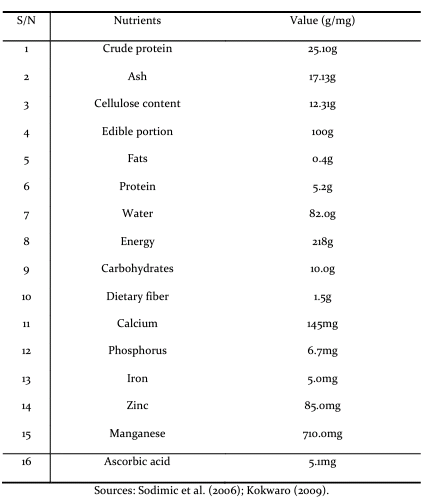
Proximate analysis (mg/100 dry matter) of bitter leaf

References
Agbogidi, O.M. and Akpomorine, M.O. (2013). Health and nutritional benefits of bitter leaf. Int.J.A.PS.BMS, 2(3):164-170.
Edeoga, H.O., Okwu, D.E. and Mbaebre, B.O. (2005). Phytochemical constituents of some Nigerian plants. African Journal of Biotechnology, 44(7):685-688
Ejoh, A.R., Tango, A.N., Ojuikwo, N.A. and Mbofung, C.M. (2005). Effects of processing and preservation methods on vitamin C and total carotenoid leaves of some Vernonia species. African Journal of Food, Agriculture, Nutrition and Development, 5(2):105-117
Ilondu, E.M. Arimoro, F.O. and Sodje, A. (2009). The use of aqueous extracts of V. amygdalina Del. in the control of saprolegniasis in Clarias gariepinus, a freshwater fish. African Journal of Biotechnology, 8(24):7130-7132
Munaya, C. (2013). Bitter leaf-based extracts cures hepatitis co-inferation and others. The Guardian Newspaper, July, 25, 2013
Okoli, R.I., Aigbe, O., Ohafu-Obode, J.O. and Mensah, J.K. (2007). Medicinal herbs used for managing some common ailments among Esan people Edo State, Nigeria. Pakistan Journal of Nutrition, 6(5):470-490
Sodimic, A.L., Adebayo, O., Oladele, N.O., Akinyemi, O., Alabi, O.O., Emeghara, U.U. and Olumuyiwa, S.A. (2006). Comparative analysis of chemical composition in three species of bitter leaf (Vernonia spp). Journal of Research in Agriculture, 3(3):75-77

Sunday, 10 January 2016

Dogoyaro (Azadirachta indica)

Igi-Oba as it is known in Yoruba land, is a tree in the mahogany family Meliaceae. Its other names are neem, neem-tree, while its scientific name is Azadirachta indica. It is a very important plant most especially in the ethno botanical world. It is used in curing diseases such as malaria and catarrah (Dont try this at home, the processes are not that simple). The stem is used as a chewing stick to clean the teeth’s and gums. The juice is believed to prevent tooth decay and infection.
Its fresh leaves are mixed with cereals during storage to prevent insect attack. The young seedlings are also commonly transplanted in the northern parts of Nigeria to check encroachment of the Sahara desert and erosion.

References
Bhat, R. B.; Etejere, E. O. and Oladipo, V. T. (1990). Ethno botanical studies from central Nigeria. Economic Botany, 44(3): 382-390

Friday, 8 January 2016

Lady's finger (Abelmoschus esculentus)

Abelmoschus esculentus also known as Okra belongs to the family Malvaceae. Okra is a warm-season annual herbaceous vegetable crop grown primarily for immature fruits used in soup and stew.
Okra is a repository of valuable nutrients. Nearly half of which is soluble in the form of gums and pectin. Soluble fibres helps to lower serum cholesterol, reducing the risk of heart diseases (Brown et al., 1999). The other half is insoluble fibre which helps to keep the intestinal trait healthy, decreasing the risk of some forms of cancer, especially colorectal cancer (Schneeman, 1998). Nearly 10% of the recommended levels of vitamin B6 and folic acid are also present in a half cup of cooked okra (Hammond and Charrier, 1997).

References
Brown, L.; Rosner, B.; Willett, W. W. and Sacks, F. M. (1999). Cholesterol – lowering effects of dietary fibre: a meta-analysis. American Journal Coin. Nutr., 69:30-42
Hammond, S. and Charrier, A. (1997). Les gombos. In: Charrier, A.; Jacquot, M.; Hamon, S. and Nicholas, D. (eds). L'ame ‘lioration des planted tropicales CIRAD/ORSTOM, Montpelier, France, pp. 313-333
Schneeman, B. O. (1998). Dietary fiber and gastrointestinal function. Nutr. Res., 13:625-632

Ewe-eran


Thaumatococcus danielli is a tropical West African rain forest rhizome plant known for its non-sugar protein: Thaumatin I, Thaumatin II and Preprothaumatin. It is also known as the sweet prayers plant because it is 2000 times sweeter than sugar and among Yoruba tribe it is known as Ewe-eran. It belongs to the family Marantaceae. 
Its local uses are versatile, ranging from cultivation as fetish plant in Gabon to collecting leaves from its natural habitat to wrapping and boiling food in Ghana and Nigeria. However, the most exciting use of T. Danielli, is its use as sweetener and taste modifier. It causes no tooth decay
A gene from T. Danielli has been inserted into a cucumber plant to increase its perceived sweetness in human esters by the Warsaw University of Life Sciences.

Ewe-eran is used for:
  • Wrapping corn pudding
  • Wrapping bean pudding (due to its heat retention property, it also adds its sweetness to the pudding)
  • Diabetics


Tuesday, 5 January 2016

Amunu tutu


Amunu tutu (Basella alba) belongs to the family Basellaceae (flowering). It is also known as Malabar spinach, it is a plant found in tropical Asia and Africa where it is widely used as a leaf vegetable.
Amunu tutu grows well under full sunlight in hot humid climates, but grows slow in low temperatures resulting in low yields.
B. alba is high in Vitamin (A, C), Iron and Calcium. It is high in protein per calorie but it is low in calories by volume. Malabar spinach is also a good source of soluble fiber.

The Fluted pumpkin

Fluted Pumpkin (Telfairia occidentalis) also known as ugwu in Nigeria, is a tropical vine grown in West Africa as a leaf vegetable and for its edible seeds. It is a member of the Cucurbitaceae (Gourd) family and is indigenous to southern Nigeria.
T. occidentalis is considered an “oil seed” the fluted gourd is high in oil (30%). The seeds constitute 27% of crude and 53% fats while the shoots of T. occidentalis contain high levels of potassium and iron. The leaves contain a high amount of antioxidant (Antioxidants are man-made or natural substances that may prevent or delay some types of cell damage), hepato protective (protects the liver) and antimicrobial properties (an agent that kills microorganisms or inhibits their growth).
In Ofe egwusi (a typical Nigerian soup), the young shoots and leaves of the female part are the main ingredients. A large dark-red seed is rich in fat and protein and can be eaten whole, ground into powder for a kind of soup or made into a fermented porridge.

For further reading, source for the underlisted references:
Aiyelagbe, I. O. O. and Kintomo, A. A. (2002). Nitrogen response of fluted pumpkin (Telfairia occidentalis Hook F.) grown sole or inter cropped with banana. Nutrient Cycling in Agro ecosystems, 64:231-235.
Emeberi, L. And Nwufo, M. (1990). Pod rots of fluted pumpkin (Telfairia occidentlis Hook F.) in Imo State, Nigeria. International Biodeterioration, 26(1):63-68
Nwufo, M. I. (1994). Effects of water stress in the post harvest quality of two leafy vegetables, fluted pumpkin (Telfairia occidentlis) and Pterocarpus soyauxii during storage. J. Sci. Agric., 64:265-269.

Related Posts Plugin for WordPress, Blogger...

Categories

Admission Updates (15) Articles (3) Careers (1) History (61) Lectures (9) New Study (8) News Updates (272) NYSC (3) Plant Story (13) Scholarships (22) The Highbrows (6) The Oops (5)